通光之路 基于类脑计算的架构、应用与未来趋势(附带光电子器件的深度聚焦)
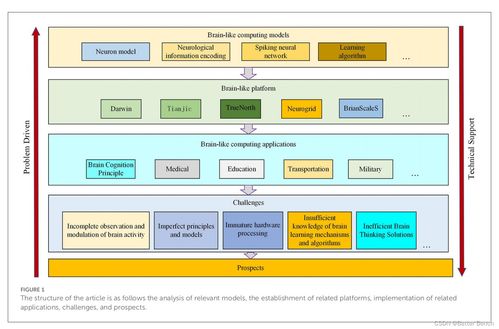
Artificial intelligence has, in recent years, transitioned from heuristic rule systems and statistical machine learning towards more complex representations. At the heart of this transition lies the need for greater computational energy efficiency and real-time adaptive learning, yet our current von Neumann architecture is struggling. Deep learning clusters require vast amounts of power and compute; carbon emissions are becoming untenable Silicon-based technologies have peaked Moore’s Law and are fundamentally disadvantaged for tasks elegantly performed by biological brains – performing parallel computation simultaneously under with ~20 W.\n\nEnter Brain-like Computing (Neuromorphic Computing) . Unlike conventional systems which separate and sequentially process information between memory and CPU driving memory latency (
如若转载,请注明出处:http://www.jcrl2010.com/product/34.html
更新时间:2026-09-11 23:01:51